Your Guide to Ligon Permanent Mold Group
Aluminum Casting Explained: Picking the Right Process for Your Application
Aluminum casting stands as an essential manufacturing procedure, delivering multiple techniques adapted to distinct project demands. Each approach provides specific strengths and aspects to evaluate, impacting variables including manufacturing volume and surface appearance. Comprehending these subtleties is crucial for reaching a well-informed choice. Because projects range considerably, the correct option can markedly affect final outcomes. What standards will inform the determination of the most fitting casting approach for your unique application?
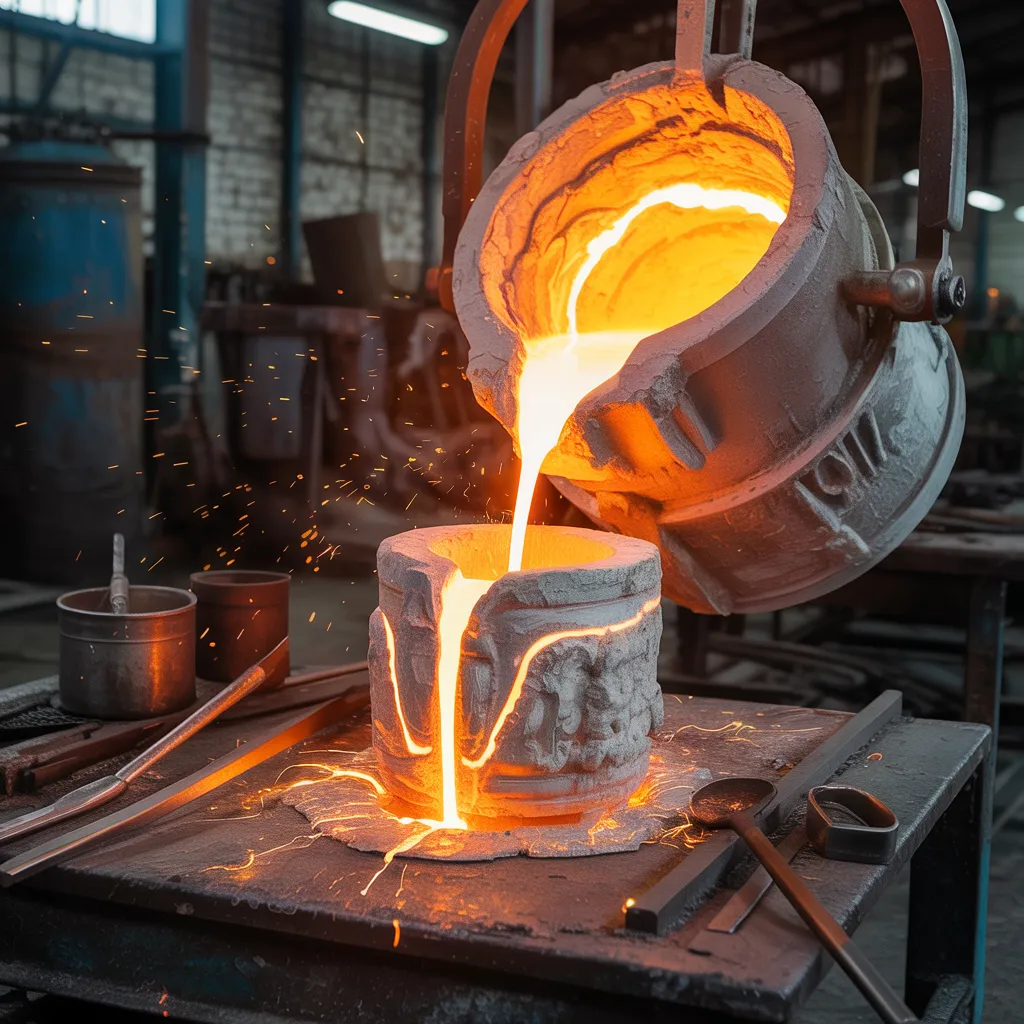
Overview of Aluminum Casting Processes
Aluminum casting includes various techniques, each suited to distinct requirements and uses. Frequently used approaches include sand casting, which utilizes sand molds for big, intricate parts, and investment casting, celebrated for its capacity to create intricate designs with high precision. An additional technique, permanent mold casting, uses reusable metal molds, offering better surface finish and dimensional accuracy. Low-pressure die casting permits the production of lightweight components with enhanced mechanical properties. In addition, gravity die casting relies on the force of gravity to fill molds, well-suited to medium-sized parts. Each method has distinct advantages, such as cost efficiency, production speed, and material efficiency, making it vital to analyze project specifications when selecting the suitable aluminum casting process.
Die Casting: Benefits and Uses
The die casting process delivers multiple essential benefits making it a top choice for various manufacturers. Its effectiveness and capacity to manufacture sophisticated forms with exacting tolerances have driven extensive use across diverse industries. Furthermore, factors regarding material choices additionally improve its adaptability in fulfilling particular project needs.
Key Benefits of Die Casting
Among the most significant benefits of die casting is its capacity to produce intricate geometries with remarkable exactness. This process facilitates the creation of complex patterns that are often difficult or unfeasible to achieve with other casting methods. Moreover, die casting delivers outstanding surface characteristics, minimizing the need for significant secondary operations. The quick production cycles linked to die casting produce considerable economic benefits for high-volume manufacturing. Additionally, die casting utilizes long-lasting metal tooling, which can withstand numerous production cycles, consequently improving long-term reliability and stability. The resulting components demonstrate outstanding dimensional accuracy and physical attributes, making die casting a preferred choice for many manufacturers seeking reliable and high-quality aluminum parts. All in all, these benefits support the method's broad adoption in multiple industries.
Standard Industry Applications
The benefits of die casting render it a widely-used choice across diverse industries. This process is particularly favored in automotive manufacturing, where exact and complex components are vital for performance and safety. Die casting also finds significant application in the manufacturing of consumer electronics, offering durable housings and intricate parts that fulfill stringent design specifications. Additionally, the aerospace sector utilizes die casting, using it to manufacture lightweight yet strong components that improve fuel efficiency. Other industries, such as medical devices and appliances, utilize die casting for its ability to produce high-quality, reliable parts with minimal waste. Overall, die casting's versatility and efficiency result in its widespread use in diverse applications, emphasizing its importance in modern manufacturing practices.
Material Options and Considerations
Selecting the appropriate material for die casting is essential, as it directly influences the performance and characteristics of the final product. Aluminum alloys are commonly preferred for their excellent strength-to-weight ratio, corrosion resistance, and thermal conductivity. Among the numerous options, A380 and A383 alloys are particularly popular due to their fluidity and ability to fill intricate molds, making them ideal for complex shapes. Moreover, A356 alloy is often picked for applications requiring enhanced mechanical properties. Each alloy features unique attributes, allowing engineers to tailor the material selection based on specific project requirements. Finally, understanding the characteristics of different aluminum alloys enables manufacturers to optimize the die casting process, ensuring the production of high-quality components that meet performance standards.
Sand Casting: Pros and Cons
Although sand casting is one of the oldest and most widely used aluminum casting techniques, it offers both benefits and drawbacks that must be carefully examined. One significant advantage is its adaptability, permitting the production of intricate designs and sizable parts. Additionally, it is cost-effective for low to medium production runs. Nonetheless, the process can lead to a rough surface finish and lower dimensional accuracy in comparison with other techniques. The sand molds can also be less durable, demanding frequent replacements. Moreover, the casting process may require longer lead times due to mold preparation. Consequently, while sand casting remains a commonly-chosen option, understanding its limitations is crucial for ensuring it aligns with specific project requirements.
Precision Investment Casting: Precision and Detail
Investment casting represents a remarkably accurate metalworking technique that enables complex designs and intricate components. This technique provides substantial benefits, including exceptional surface quality and dimensional precision, rendering it perfect for intricate geometries. Common applications span various industries, from aerospace to medical devices, where precision is paramount.
Process Overview
One notable advantage of investment casting resides in its capacity to create elaborate and refined components with high dimensional accuracy. This process initiates with creating a wax pattern, which is encased in a ceramic shell. When the shell hardens, the wax is liquefied and removed, resulting in a hollow mold. Liquid aluminum is then cast into this mold, preserving the accurate details of the original pattern. After cooling, the ceramic shell is removed to reveal the final component. Investment casting is particularly appropriate for complex geometries and thin-walled sections, making it a favored choice for industries needing high precision. The process can support various alloys, ensuring versatility in meeting individual project requirements.
Benefits of Investment Casting
While multiple casting approaches can be found, investment casting excels due to its unparalleled precision and capability to manufacture highly detailed components. This process facilitates the creation of complex geometries with precise tolerances, making it ideal for intricate designs. The use of a wax pattern facilitates fine details to be captured, delivering a smooth surface finish that often requires limited machining. Moreover, investment casting works with a wide range of aluminum alloys, improving material versatility. The process also limits waste, as it utilizes a near-net-shape casting technique, generating cost efficiency in production. What's more, investment casting is suitable for both small and large production runs, making it a versatile choice for different manufacturing needs.
Popular Applications
Accuracy and meticulous attention to detail are essential in many industries, making investment casting a favored method for producing critical components. This technique is broadly used in aerospace, where detailed parts must endure extreme conditions. The automotive industry also utilizes investment casting, producing complex components that improve vehicle performance and safety. In medical applications, the ability to produce exact and biocompatible parts is crucial for devices and implants. Furthermore, the electronics sector utilizes investment casting for manufacturing detailed housings and connectors that meet strict specifications. In summary, investment casting supports various fields, providing high-quality, durable, and intricate components that meet demanding requirements across multiple applications, guaranteeing reliability and efficiency in their respective functions.
Permanent Mold Casting Method: Robustness and Productivity
Permanent mold casting stands out as a remarkably effective method for producing durable aluminum components. This process uses metal molds, which offer superior heat retention, resulting in faster cooling rates and improved mechanical properties in the final product. The strength of components created through permanent mold casting is due to finer grain structures and enhanced density, causing fewer defects in comparison to other methods. Furthermore, the reusability of the molds results in considerable cost savings and reduced waste, making it an environmentally friendly option. Ideal for medium to high-volume production, permanent mold casting provides consistent quality and dimensional accuracy, making it a favored choice for industries needing durable and precise aluminum parts.
Low-Pressure Casting: An Closer Examination
Low-pressure casting represents a flexible method that provides unique benefits for manufacturing aluminum parts with complex configurations. Within this method, melted aluminum is fed into a cavity via managed low pressure, providing even distribution and limiting flaws. This approach facilitates the production of intricate shapes and slender-walled components, rendering it perfect for uses in automotive, aerospace, and consumer goods. Moreover, low-pressure casting offers outstanding surface characteristics and measurement precision, minimizing the necessity for extensive post-processing. The method is resource-efficient and fitting for mass production, permitting fabricators to realize cost savings. Overall, low-pressure casting stands out for its ability to balance precision and efficiency, explore this making it a preferred choice for crafting high-quality aluminum parts.
Factors to Consider When Choosing a Casting Method
When selecting an aluminum casting method, multiple factors play a important role in determining the most fitting option for a particular project. Key considerations include the project's complexity, intended surface finish, and dimensional accuracy. The scale of production also affects the choice; methods like sand casting are well-suited for low volumes, while die casting fits high-volume needs. Material properties required, such as strength and corrosion resistance, further direct the decision. Also, cost constraints and lead times must be assessed to confirm the selected method corresponds to budgetary and scheduling requirements. Finally, the environmental impact of the casting process can be a key factor, as companies progressively prioritize sustainability in their manufacturing practices.
FAQ
What Safety Precautions Should Be Implemented During Aluminum Casting?
During aluminum casting, critical safety measures include donning personal protective equipment, providing proper ventilation, employing heat-resistant tools, maintaining a clean workspace, and following established protocols to minimize burns, inhalation hazards, and injuries from molten metal.
How Can I Recycle Aluminum Scrap From Casting?
To repurpose aluminum scrap from casting, it's possible to collect the scrap, sort it by alloy type, cleanse it to eliminate contaminants, and then bring it to a recycling facility or sell it to metal recyclers.
What Is the Cost Comparison Between Different Aluminum Casting Methods?
Price comparisons between aluminum casting methods vary substantially. Die casting is typically more expensive owing to tooling costs, while sand casting delivers lower initial expenses. Investment casting provides precision but often incurs higher material and labor costs.
What Impact Does Temperature Have on Aluminum Casting Quality?
Temperature considerably affects aluminum casting quality; higher temperatures can lower viscosity, improving flow but elevating defect risks. Conversely, lower temperatures enhance precision but may lead to incomplete molds, underscoring the importance of ideal thermal management during casting.
Can You Perform Aluminum Casting at Home?
Aluminum casting is possible at home when individuals possess the necessary equipment, safety precautions, and skills. Nevertheless, successful outcomes are contingent upon understanding the materials and processes involved, as well as maintaining proper temperature control.